Glaucoma Research
Investigating OPTN-mediated neuroprotection and IOP-independent mechanisms in normal and high-tension glaucoma
Updated on January 12, 2025
Research Overview
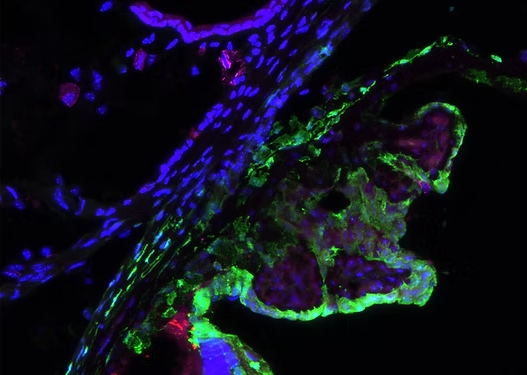
Our latest research has revealed that Optineurin (OPTN) plays a crucial neuroprotective role in retinal ganglion cells (RGCs), protecting against neuroinflammation in both normal tension glaucoma (NTG) and high-tension glaucoma (HTG). OPTN dysfunction contributes to chronic neuroinflammation, leading to sustained RGC death through IOP-independent mechanisms.
We have discovered that the OPTN-NPY signaling pathway provides neuroprotection by suppressing CHOP-associated neurodegeneration. This breakthrough offers new therapeutic targets for IOP-resistant glaucoma and highlights druggable pathways for treating optic neuropathies.
Research Approaches
OPTN-NPY Signaling
Investigating Optineurin-NPY pathway for neuroprotection and inflammation control
Neuroinflammation Studies
Analyzing astrogliosis and microglia activation in IOP-independent mechanisms
Therapeutic Targeting
Developing CHOP-associated neurodegeneration inhibitors and OPTN modulators
Key Research Areas
OPTN Neuroprotection
Optineurin protects RGCs and ameliorates neuroinflammation in both NTG and HTG
IOP-Independent Pathways
Chronic neuroinflammation and astrogliosis leading to sustained RGC death
NPY Signaling
OPTN-driven NPY upregulation suppresses CHOP-associated neurodegeneration
Current Research Projects
Comprehensive Investigation of OPTN-Mediated Neuroprotection in Glaucoma
Building upon our previous unbiased genomic screens that identified key transcriptional programs controlling RGC injury responses, we have discovered that Optineurin (OPTN) protects retinal ganglion cells through the OPTN-NPY signaling pathway. Our research demonstrates that OPTN dysfunction contributes to chronic neuroinflammation, astrogliosis, and microglia activation that propagates from retina to optic nerve, revealing shared IOP-independent mechanisms between normal and high-tension glaucoma.
This comprehensive study encompasses: (1) mechanistic investigation of OPTN-driven NPY upregulation in suppressing CHOP-associated neurodegeneration, (2) characterization of neuroinflammatory cascades leading to sustained RGC death, and (3) development of novel therapeutic strategies targeting the OPTN-NPY pathway for IOP-resistant glaucoma treatment.
Published in bioRxiv (January 2025) • Multi-institutional collaboration
OptiCare: Mobile IOP Measurement Platform with Vision Transformer Technology
We are developing OptiCare, an innovative mobile application platform that leverages Vision Transformer (ViT) technology for non-invasive intraocular pressure (IOP) measurement using smartphone cameras. This cutting-edge approach combines advanced computer vision algorithms with deep learning models to provide accessible, real-time glaucoma screening capabilities outside traditional clinical settings.
OptiCare integrates state-of-the-art neural network architectures to analyze ocular features and estimate IOP levels, potentially revolutionizing early detection and monitoring of glaucoma in underserved populations. This technology represents a significant advancement in telemedicine and democratizes access to critical eye health assessment tools.
Technology development • AI-powered diagnostic platform