Decoding the Code of
Neural Degeneration and Regeneration
Leveraging computational modeling and data-driven neuroscience to accelerate therapeutic discovery for neurodegenerative diseases

Lab Introduction
Tian lab at the Department of Neurology at Beth Israel Deaconess Medical Center and Harvard Medical School focuses on the computational and molecular dissection of the genetic programs that determine the degeneration of susceptible neurons in neurodegenerative diseases, including but not limited to Amyotrophic Lateral Sclerosis, Alzheimer's Disease and Glaucoma. Our computational approaches leverage probabilistic graphical models, representation learning, and foundation models to infer latent cellular states and regulatory networks from high-dimensional transcriptomic data. Addressing this key research question will provide insights into novel neurodegenerative treatments by reprogramming susceptible neurons to be more resistant to disease-related stress.
Lab News
Xiaozhou L. (previous visiting Software Engineer) joined Microsoft as Software Engineer on Networks.- updated February 20th, 2026
Laura N. (previous undergraduate student at Harvard College, CS91r) joined Tiktok on agentic AI.- updated February 20th, 2026
Luxuan Z. (previous research assistant) were admitted by University of North Carolina at Chapel Hill as a PhD of Computational Biology- updated February 20th, 2026
Zilin D. (research internship student) received Amazon FTR Fellowship.- updated December 24th, 2025
Ray J. (current research assistant) were admitted at the Biostatistics Program at Boston University with Scholarship- updated April 24th, 2025
OUR RESEARCH
Neurodegeneration and Brain Aging: From Bench to Bedside

Amyotrophic Lateral Sclerosis
We study motor neuron degeneration through computational abstractions of high-dimensional biological processes, integrating molecular measurements with machine learning frameworks that model latent vulnerability patterns and stress-response programs across cellular states. By leveraging approaches from representation learning, structured modeling, and probabilistic inference, we identify reproducible signatures of selective neuronal failure and computationally prioritize intervention strategies aimed at stabilizing or reprogramming degenerating neurons. Our work aims to translate these insights into actionable therapeutic targets for ALS patients.
Updated on December 26th, 2025
Glaucoma
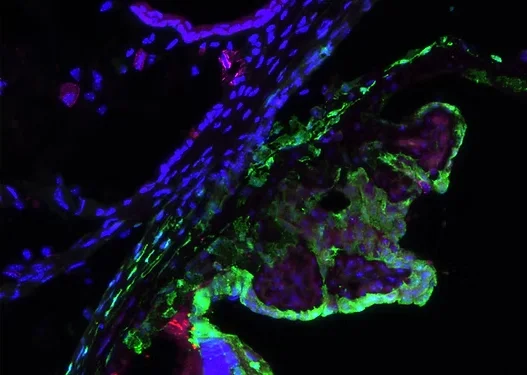
We study glaucoma through computational abstractions of cell-type-specific stress responses, integrating molecular and imaging measurements from multiple ocular hypertension and normal-tension glaucoma mouse models with machine learning frameworks that model how retinal ganglion cell-intrinsic programs interact with neuroimmune signaling contexts to shape vulnerability and resilience. By leveraging representation learning, structured modeling, and probabilistic inference, we identify reproducible patterns of degeneration and computationally prioritize strategies aimed at preserving neuronal function and visual integrity. Our goal is to develop neuroprotective approaches for glaucoma treatment.
Updated on December 26th, 2025
Alzheimer's Disease
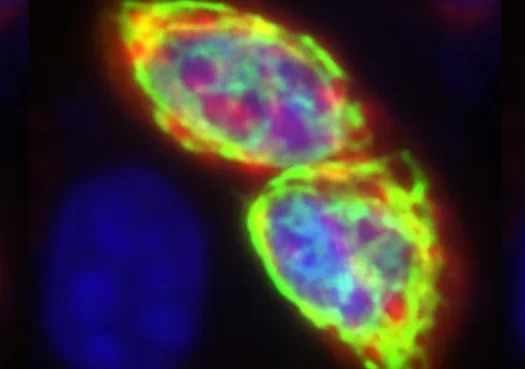
We study Alzheimer's disease by dissecting how pathological aging diverges from normal aging in the brain, with a focus on identifying the molecular and cellular processes that drive this transition. Using experimental models that capture age-associated vulnerability, we investigate how neuroinflammatory states interact with intrinsic neuronal stress responses to shape disease onset and progression. Computational analysis is used to organize these complex observations into coherent frameworks that distinguish adaptive aging programs from maladaptive, disease-driving processes, enabling principled interpretation of neurodegenerative risk and therapeutic response.
Updated on December 26th, 2025
Brain-Inspired AI & Computational Intelligence
From neural plasticity to next-generation AI — distilling principles of biological intelligence into machine learning algorithms, optimizers, and biomedical foundation models.
Tian Lab studies the human nervous system not only as a target of disease, but also as a source of principles for next-generation AI. We develop neuro-inspired methods that translate plasticity, memory, adaptive learning, reasoning loops, and robust computation into machine learning algorithms and AI systems.
Our recent projects include NeuroPlastic Optimizer, HippoCortex, CorticalLoop, Dynamic Composable Sparse Attention, NV-Rep, and RefractoryRT, spanning biologically inspired optimization, agent memory, neuro-inspired reasoning, efficient attention, biomedical representation learning, and neural runtime systems.
CONTACT US

Lab Location
Department of Neurology
Beth Israel Deaconess Medical Center
Harvard Medical School